Student Opportunities
We work to provide our students rich and deep experiences that will educate, promote change, and get their hands dirty. Come join us!
With community at its core, the Institute for the Environment works to create and support interdisciplinary, project-based student engagement in, for, and about the environment. Through external partnerships for special student-run projects, discussion panels and films, and co-sponsorship and coordination with existing clubs, groups, and departments on campus, students have countless opportunities to cultivate their passion and leadership for the health of our environment for years to come. Additionally, those seeking to make environmental engagement a larger part of their campus lives will find an array of work and internship experiences available to them right outside their residence halls.
Academic Year 2025-2026 Programs
Internships
The Institute for the Environment has grant funding available for the 2025–2026 academic year for students participating in unpaid or underpaid internships or experiences that broadly apply to environmental and sustainability-related topics.
Please read the criteria below and apply by January 12th, 2026 for the opportunity to receive this competitive grant for the Spring 2026 semester.
APPLICATION PERIOD EXTENDED! DUE DATE = 1/20
The details:
- Students can earn a stipend up to $15.63 per hour for internship opportunities!
- Opportunities can be in-person, hybrid, and even virtual!
- We are accepting up to 15 internships/Students to support/fund per semester for the 2025-2026 academic year!
Requirements for funding:
- Students must find and procure an environmentally or sustainability adjacent internship. See below for some ideas or visit the friendly coaches in the Career Education Center for support!
- Students will be required to reflect on their experience (either through a credit or non-credit bearing class).
- Students will be invited to engage in the Saint Michael’s Institute for the Environment’s programming and are required to attend the Spring Branching Out Student Symposium.
How to apply for funding:
- Submit the details of your internship experience (such as a position description from the employer).
- Submit your most recent resume.
- Submit a paragraph explaining why you are applying for funding and how the opportunity will support your career goals. Please include details of compensation you may receive from the position beyond this funding.
There are multiple internship opportunities available in the environmental sector! Here are some potential employers:
- Vermont Natural Resources Council
- GSR Solutions
- Vermont Information Processing (VIP)
- 350 Vermont
- Shelburne Farms
- Crow’s Path
- Re-Tribe
- Common Roots
- NOFA VT (Northeast Organic Farming Association of Vermont)
- Vermont Youth Conservation Corps
- Green Mountain Farm to School
- Salvation Farms
- Upper Valley Land Trust
- Zeno Mountain Farm
- ECHO Leahy Center for Lake Champlain
EcoGather Courses

Self-guided courses provided through EcoGather at Sterling College that equips learners with the knowledge and skills to understand the science of climate change and move toward solutions to combat our greatest existential threat. The courses demystify the interlocking ecological, economic and social crises and offers a tantalizing cultural vision of how we might respond in the context of the diverse realities that are faced today.
Cost: FREE!
Interested in learning more? Fill out this form.

GVI Individual Courses
Take courses in wildlife conservation, conservation and scientific research, careers in sustainable development, climate crisis and sustainability, ethics in sustainable development, impact measurement, leading teams for impact, and social entrepreneurship and impact investing at your own pace during the summer.
Cost: $395
GVI Travel Programs
Study with a GVI program like foundations in wildlife conservation, foundations in climate change & sustainability, foundations in social entrepreneurship, advanced wildlife conservation, or mastering sustainable development to get ahead in the summer months.
Cost: $1395
Interested in funding? Express interest here!
MindEdge Extended Learning Opportunities
MindEdge provides practical skills and industry-recognized credentials to help you stand out in your career. Through engaging content developed by experts, interactive learning tools, and real-world case studies, you’ll gain the knowledge and confidence to drive meaningful impact. Every course is a step toward a more sustainable tomorrow—and your own career growth.
Cost: $300-$500
Research
Are you a student looking to connect your interests and coursework with an environmental theme through research? Consider applying for summer research in the early spring. Benefits of summer research include a summer stipend with additional funding upon need/request, and your name on any publication or product as a result of the research. This is a great opportunity to bulk up your résumé, remain a part of the SMC community over the summer, and earn some extra money.
Academic year research is full for the 2025-2026 school year. Please look for information in the fall for Summer 2026.
Here’s how it works:
- Attend the (optional, but informative) information session for summer research opportunities across SMC in early January.
- Find a faculty member who is willing to act as a project mentor. Faculty members will not search for students; it is your responsibility to reach out to them and demonstrate your interest.
- Complete and submit an application–found in the MySMC Portal–by the deadline at the end of February.
Past Examples
“Environmental Paleolimnology in Saint Michael’s Natural Area Waterbodies”
Alexa Roux ’26
Majors: Chemistry and Environmental Science
Mentor: Professor Clay Williams (Environmental Studies and Science)
Through testing of four freshwater bodies in the natural area, Roux’s research will use paleo-ecotoxicology to determine how past anthropogenic contamination in the aquatic sediment influences the current water quality. “Because natural freshwater bodies are often at the lowest point of elevation, all of the man-made contaminants run through flooding and precipitation into these lakes. These contaminants build up in layers, which can be indicators of the lake’s health,” Roux said. Roux will compare the current state of the water to the historical record of its sediment.
“Gauging Knowledge of Invasive Species and Pollution in Vermont”
Elizabeth Crotty ’24
Major: Biology
Mentor: Professor Declan McCabe (Biology)
In order to track student and community knowledge, Crotty and her mentor created a digital survey to distribute. They also plan to have a few physical copies of the survey available at the Natural Area surrounding the College. Despite the benefits of creating new trails and educating the community, however, the question of costs can become an issue since some Natural Area stakeholders might be reluctant to spend the time, money, and resources on a project such as Crotty’s. For this reason, she said, “Through our research we also want to see how justifiable spending the resources and the money on it is. If we get the data solid, defined, and specific, then it’ll help other people if they’re considering further similar work in the future,” she said.
Conferences
Funding for participation in conferences is available!
Tell us more about your opportunity, by submitting an application for funding below!
Interested in funding? Express interest here!
Check back for more info, we will post more opportunities/events as they arise.
RISE Summit @ UVM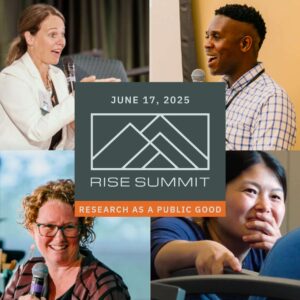
June 2026 – Date TBD
The RISE Summer is a one-day summit where representatives from UVM, other universities, community organizations, municipalities and regions, businesses and government will come together to consider how collaborative research can provide critical tools to solve problems in their rural places.
This year’s theme is Research as a Public Good and will be held at the Grand Maple Ballroom in the Davis Center of the University of Vermont, with virtual attendance options available.
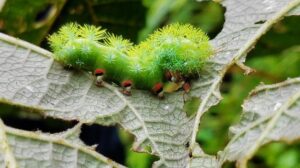
Climate Change and Caterpillars
Location: La Selva Biological Station, Costa Rica
Dates: December 27, 2025 – January 4, 2026
Sponsor: Earthwatch
As an Earthwatch participant, the data you help gather will expand scientist understanding of over 9,500 species of both caterpillars and parasitoids, contributing to vital research on the impact of climate change on these delicate ecosystems. As you assist in preserving the intricate biodiversity of rainforests in Costa Rica, you may even find a new species—it’s happened before!
Click on the link to learn more about the Climate Change and Caterpillars expedition.
Following Forest Owls in the Western U.S.
Location: Utah
Dates: May 17 – May 24, 2026
Sponsor: Earthwatch
In the western U.S., climate change and land use practices are altering the habitat of many wildlife species, including many small owl species like the Flammulated Owl, the Northern Saw-whet Owl, the Elf Owl, the Whiskered Screech-Owl, and the Northern Pygmy-Owl. Participants in this expedition will inventory and study the dynamics of tree cavities in different forest types, and investigate the efficacy of introducing nest boxes as a tool that could replace/augment natural cavities and help to keep some owl populations afloat.
Click here to learn more about the Following Forest Owls in the Western U.S. program.
Endangered Whooping Cranes on the Texas Coast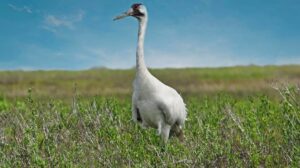
Locations: Austwell, Texas
Dates: January 4 – January 10, 2026
Sponsors: Earthwatch
As an Earthwatch participant, you will assist researchers in exploring the complex coastal salt marsh ecosystems along the Texas Gulf Coast to study how variable hydrology and other environmental changes affect this endangered species. You will closely monitor the birds—recording their locations, behavior, access to food, defense of coastal territories, and the frequency with which they leave their territory. You’ll share the marsh with the cranes, listening to their famous whooping calls as you conduct abundance surveys of their favorite food resources, crabs and wolfberries, in coastal wetlands.
Click here to learn more about the Endangered Whooping Cranes expedition.
Costa Rican Sea Turtles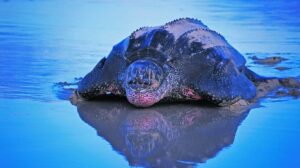
Location: Costa Rica
Dates: December 11 – December 19, 2025
Sponsor: Earthwatch
Researchers must understand all aspects of sea turtles’ lives to ensure their protection, including migration routes and nesting success. As part of this effort, you will patrol the beach after dark to observe these remarkable creatures up close. During your patrols, you will identify individual turtles, record essential measurements, and monitor their health. You may also collect skin samples for genetic research, attach satellite transmitters to track their movements or assist in relocating eggs from nests at risk of being washed away. With sea turtle populations declining, every piece of data—and every turtle—plays a crucial role in their conservation.
Click here to learn more about the Costa Rican Sea Turtles expedition.
Conserving Wild Bees and Other Pollinators of Costa Rica
Location: Costa Rica
Dates: December 14 – December 20, 2025
Sponsor: Earthwatch
In the rugged tropical forests of the Monteverde Cloud Forest Reserve or the lower elevation site of San Luis de Monteverde, home to one of the world’s most endangered ecosystems, the tropical dry forest, you will join the research team to investigate how threats to bees and butterflies will affect the critical pollination services they provide.
Click here to learn more about the Wild Bees and Other Pollinators expedition.
Wildlife in the Changing Adorran Pyrenees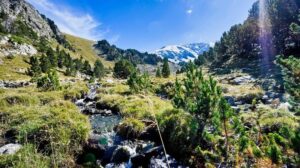
Location: Valley of Ordino, Andorra
Dates: May 14 – May 22, 2026
Sponsor: Earthwatch
As an Earthwatch participant, Your work will help scientists understand how species’ life cycles are shifting and whether ecological relationships, such as plant blooming and pollinator activity, are staying in sync. This data will provide valuable insight into conservation planning and local decision-making.
Click here to learn more about the Changing Andorran Pyrenees expedition.
Applications are closed for Summer 2025 positions with the Institute for the Environment, but check back in August for Academic Year 2025-2026 positions!
To search for jobs and internships in the field of environmental science, visit Handshake and login with your MikeNet credentials. Under the “Jobs” tab, you can search for positions using keywords, locations, job titles, and employer names. You can also filter jobs based on major, job function, and industry.
Here are some search suggestions for finding environmental science positions:
Keywords – “environmental”, “ecology”, “wildlife”, “sustainability”, “conservation”, “nature”
Industries – Environmental Services, Animal & Wildlife
Job functions – Environmental/Sustainability Mgmt., Lab work/Science
Login to Handshake

Our employment cycle begins each spring. When we have open positions, the applications will be posted on Handshake. Typically, students will apply for employment in the fall, interview at the end of the fall semester, and begin employment starting the following spring semester. This way our students get a full working season (spring, summer, and fall) with us before graduating, moving on to another position at the college, or continuing to work with the Institute.
The Summer Farm Crew positions are special in that you do not have to be previously-affiliated with the Institute for the Environment or the Environmental Studies and Science department in order to apply. If you are interested in working on production, vegetable farm in the summer months, consider applying each spring!
Ecological Restoration: Maintenance & Operations Coordinator (1-2 openings)
The Ecological Restoration: Maintenance & Operations Coordinator position is for a student at Saint Michael’s College that is interested in applying their academic studies and cultivating leadership skills within the context of managing an educational native and flowering gardens, small-scale food forest, and multi-use natural area. This position is ideal for someone interested in balancing the diverse needs of academic education, research, artistic expression, recreation, athletics, and community engagement and/or someone interested in small ecologically-managed horticultural production and its underlying social, cultural, environmental and biologic principles. Furthermore, this student is committed to learning our systems to thoughtfully and thoroughly engage visitors in our campus. Collaboration, organization, communication, and critical thinking are key skills of this position.
This position is for a student in their first or second year of school and ideally has an interest in matriculating through the leadership team for the Center.
Ecological Restoration: Education & Outreach Coordinator (1-2 openings)
The Ecological Restoration: Education & Outreach Coordinator position is for a student at Saint Michael’s College that is interested in applying their academic studies and cultivating leadership skills within the context of articulating the work of and programming associated with the management of an educational native and flowering gardens, small-scale food forest, and multi-use natural area. This position is ideal for someone interested in balancing the diverse needs of academic education, research, artistic expression, recreation, athletics, and community engagement and/or someone interested in small ecologically-managed horticultural production and its underlying social, cultural, environmental and biologic principles. Furthermore, this student is committed to learning our systems to thoughtfully and thoroughly engage visitors in our campus. Collaboration, organization, communication, and critical thinking are key skills of this position that focuses on the creation of educational materials and experiences for campus and community members.
This position is for a student in their first or second year of school and ideally has an interest in matriculating through the leadership team for the Center.
Sustainable Campus Program Coordinator (1 opening)
The Sustainable Campus Program Coordinator position is for a student of Saint Michael’s College that is interested in applying their academic studies and cultivating leadership skills within the context of environmental awareness on a small, residential campus. This is an advanced position for a student with a background in diversity, marketing, education, and event coordination – planning and implementation. This student will approach their duties, specifically event planning and social media presence, through the lens of and have a focus on Diversity, Equity, & Inclusion.
The focus on these systems and collaboration with their peers will allow the student the opportunity to put many of their academic studies into practice and complement them with technical skills, build a professional network, and cultivate leadership skills.
This position is for a student in their third or fourth year of school and ideally has an interest in self-starting, leadership, and accountability.
Farm & Food: Maintenance & Operations Coordinator (1 opening)
The Farm & Food Program: Maintenance & Operations Coordinator position is for a student of Saint Michael’s College that is interested in applying their academic studies and cultivating leadership skills within the context of managing and contributing to an educational farm stand, small-scale raised bed gardens, and campus-level food pantry.
The Maintenance & Operations Coordinator may be past summer employees, past farm program interns or students, past research students, or just exploring their interest in sustainable ag. As outlined in your on-boarding info, you will be evaluated by your attendance and level of participation in weekly meetings, programming. Commitment is crucial to success in this position.
Summer Farm Crew (4-6 openings)
The Summer Farm Crew Member position is for a student of Saint Michael’s College that is interested in applying their academic studies and cultivating leadership skills within the context of managing an educational market farm. This position is ideal for someone interested in small organically-managed vegetable production and its underlying social, cultural, environmental, and biologic principles, as well as someone who has a keen eye for attention to detail, systems thinking, and knowledge of best agricultural practices on small-scale market farms. Furthermore, this student is committed to learning our systems thoughtfully and thoroughly engaging visitors in our farm.
The Farm Team Member may be past summer employees, past interns or research students, or just exploring their interest in sustainable ag. As outlined in your on-boarding info, you will be evaluated by your attendance and level of participation in weekly meetings, programming. Commitment is crucial to success in this position.
Apply here!
Scholarships and Courses
What is the Leahy Scholars Program?
This scholarship program is part of a $6.5 million federal appropriation that seeks to establish Saint Michael’s as a lighthouse for the institutional models needed to span the educational and workforce development continuum for coordinated, systemic action.
Climate change is a complex systemic problem that requires coordinated collective and systemic action to solve (Stephens et al., 2008). Through the Patrick ’61 and Marcelle Leahy Institute for the Environment, Saint Michael’s has established a large scholarship program to fund students’ exploration into and contributions to the interdisciplinary fields of study AND practice that will provide them with the skills, knowledge, AND experiences that will contribute to the coordinated collective and systemic action needed to contend with and serve the complex challenges of our time.
Applications are now open for the 2026-2027 Academic Year!
Why should I apply?
The programs of the Institute connect our students with alumni and community-based experts in the field as a tool for career development and opportunity, provide a flexible pathway to post-secondary training and learning opportunities, and develop the connective tissue between institutions of higher education in Vermont to reimagine and develop a pool of engaged and experienced citizens to meet the needs of the workforce in the environmental industry here in Vermont and beyond.
Students will enter into and contribute to an Environmental Community of Practice. Work within this community will span intellectual exploration, experiential application on campus, in the community, in service to others, and globally. Students can work towards two levels of accomplishment: a certificate in environmental leadership and/or a self-designed interdisciplinary minor in environmental studies with concentrations in 1 of 5 relevant content strands – sustainability, environmental education, environmental analysis, ecological restoration, farm & food systems.
Who is eligible to apply?
These scholarships are available for SMC students in their first, second, third, and fourth years, each year with its own award criteria. There are some restrictions for applicants, so please carefully review the award criteria below to determine if you are eligible before applying.
Criteria for All Applicants:
- You must qualify as a U.S. citizen.
- You must demonstrate financial need-based aid through the FAFSA. Ensure all your financial information is on file with the Saint Michael’s College Student Financial Services Office prior to applying.
- Priority is given to Vermont residents. Residents of other states are very much encouraged to apply!
- You must commit to either a double major or a major/minor combination. Environmental Studies & Sciences major/minor must be one of them. You should plan to focus on one of the Institute’s core content areas: environmental education, farm & food, environmental analysis, ecological restoration, and sustainability. This will be declared at the end of the first semester of sophomore year.
- You must also complete regular, sustained, and repeated community engagement work and participation in the I4E’s Environmental Community of Practice – events, lectures, projects, volunteer hours, and service trips.
Incoming First-Year Application Criteria:
- Share your high school GPA. Be in good academic standing.
- Attach a piece of work from your high school or gap year experience that demonstrates how climate change has influenced your life. Provide a 5-7 sentence caption for your work.
- Please Note: To apply for sophomore year funding, you will need to have had at least one environmentally themed course in your first year and participated in at least three events offered by the I4E, and declare a major or minor in ESS.
Rising Sophomore Application Criteria:
- State which FYS you took, and think about how it relates to the environment.
- Declare ESS double major/ESS minor + 2nd major combo by end of the fall semester.
- Document your participation in 8 total past events, programs, or courses during your First Year OR elaborate on environmentally themed events, courses, and programs you hope to get involved with in your Second Year at SMC.
- Write an original piece describing how climate change has influenced your life and how that informed your decisions for your choice of academic study. Submission can be an essay, vlog, or podcast.
Rising Junior Application Criteria:
- Double major in ESS AND something else (such as art & design, DMC, business, public health, education, criminology, etc.), OR a non-ESS major + ESS minor.
- Take an environmentally-themed First-Year & Junior Year Seminar, or articulate how you can apply your FYS content to the environment.
- Write a narrative about how you’ve incorporated environmental programming into BOTH your community and academic engagement at SMC.
- Describe your completed or planned practicum experience.
- Provide a recommendation from a faculty member in your major.
- 3.0 GPA minimum.
Rising Senior Application Criteria:
- Double major in ESS AND something else (such as art & design, DMC, business, public health, education, criminology, etc.), OR a non-ESS major + ESS minor.
- Take an environmentally-themed First-Year & Junior Year Seminar, or articulate how you can apply your FYS content to the environment.
- Write a narrative about how you’ve incorporated environmental programming into BOTH your community and academic engagement at SMC.
- Describe your completed practicum experience.
- Show a work sample from your practicum experience.
- Provide a recommendation from a faculty member in your major.
- 3.0 GPA minimum.
When are applications due?
Applications are NOW OPEN! Applications are due on May 8th!
*Late applications WILL NOT BE ACCEPTED!
How do I apply?
Click the button below to apply now! Please note: If applications for the current Academic Year are closed, the link will not work. Please check that we are in an active award cycle before inquiring about the broken link.

There are a variety of courses offered throughout different academic programs that contribute to students’ environmental learning. The table below is the most updated list of interdisciplinary, environmentally-themed courses:
Our Alumni

Anna Beach '22. Currently working as a Graduate Teaching Assistant and pursing an M.S. at SUNY College of Environmental Science & Forestry.
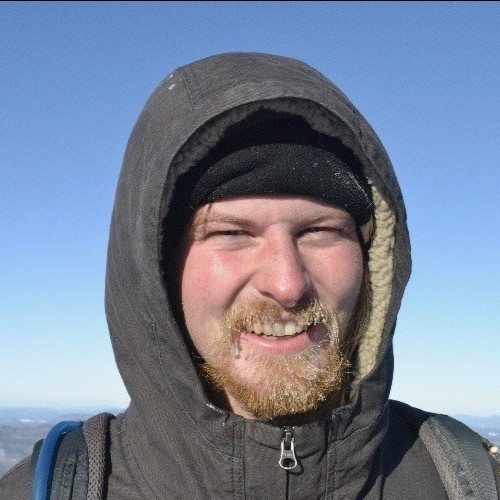
Colin O'Brien '19. Currently working as the Produce Distribution Manager at Pitchfork Farms in Burlington, VT.

Emily Grant '22. Currently serving as an intern and seasonal worker at Conservation Legacy.
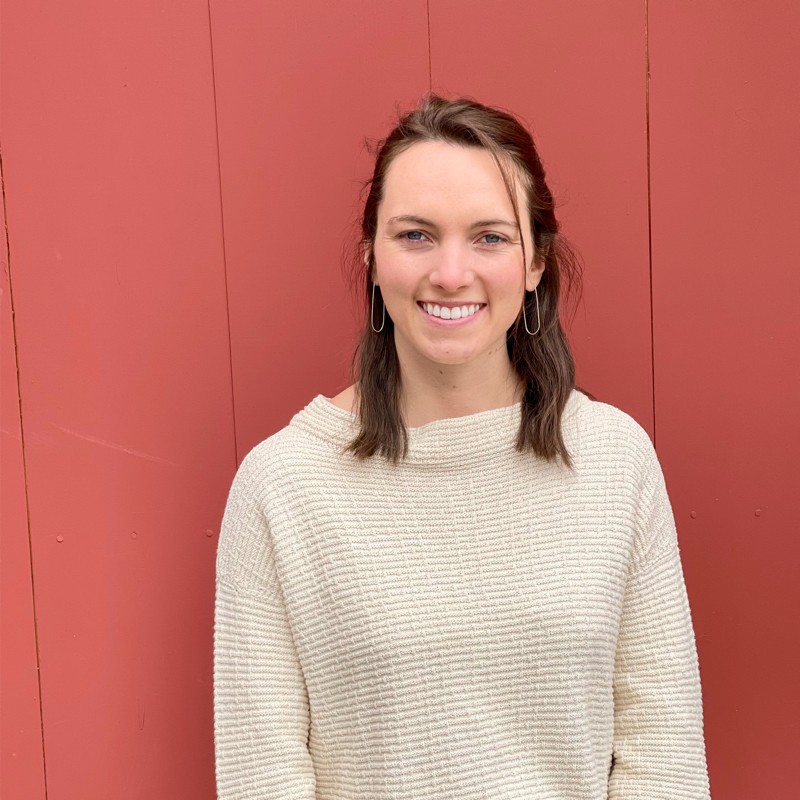
Kristen McDowell '19. Currently working as the Operations Coordinator at the Intervale Food Hub in Burlington, VT.
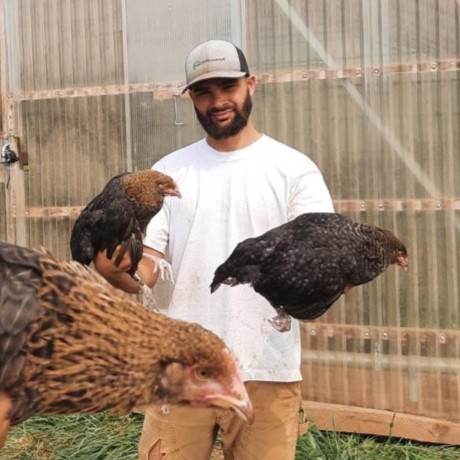
Nick Sette '19. Working as the Biocultural Conservation Farm Manager at Oak Spring Garden Foundation in Upperville, VA.

Sarah Rodgers '18. Working as the Outdoor Learning Spaces Coordinator at Wake Forest University in Winston-Salem, NC.